
Oct 11, 2026
Kenya has one of the most developed banking sectors in Sub-Saharan Africa, with banking sector assets of Kshs 8.4 tn, equivalent to 47.5% of GDP, and one of the most advanced digital finance ecosystems globally. Yet its mortgage market remains among the shallowest on the continent relative to the size of the economy. As per the latest Bank Supervision Annual Report 2025 by the Central Bank of Kenya (CBK), there were only 30,762 mortgage loan accounts in the market as at December 2025, with an outstanding value of Kshs 307.2 bn, against customer deposits of Kshs 6.1 tn. Mortgages therefore account for only 7.1% of the banking sector's gross loan book of Kshs 4.4 tn, and 1.7% of the country's nominal GDP of Kshs 17.6 tn in 2025, as per the Economic Survey 2026. In urban areas, homeownership declined to 23% in 2024 from 30.0% in 2013, and in Nairobi only 7.7% of households own the homes they live in, as per the KNBS 2023/24 Kenya Housing Survey. Even among those who do own, mortgages play a marginal role, with 91.4% of home acquisitions financed through cash or savings, 5.5% through loans, and fewer than 1.0% of households having acquired their homes through mortgages.
Notably, 2025 marked a turning point for the market, with the value of outstanding mortgages growing by 10.0%, the highest growth in a decade, as the average mortgage rate declined by 1.7% points to 13.5%, from 15.2% in 2024. This was on the back of the CBK’s easing cycle, which saw the Central Bank Rate (CBR) cut by a cumulative 425 bps to 8.75% from a peak of 13.0% in mid-2024, where it was retained at the 7th October 2026 MPC meeting, alongside the revised Risk-Based Credit Pricing Model (RBCPM), anchored on KESONIA, aimed at improving the transmission of monetary policy to lending rates. Additionally, the Kenya Mortgage Refinance Company (KMRC) raised a Kshs 3.0 bn sustainability bond in May 2026, while banks such as KCB and Stanbic launched single-digit fixed-rate mortgages of between 8.9% and 9.5%. However, the market remains constrained by low incomes, high property prices, rising construction costs, lengthy titling processes, elevated non-performing loans and a mismatch between short-term deposits and long-term mortgage assets.
We have been tracking the evolution of Kenya's mortgage market and home financing landscape, and below are some of the most recent topicals we have done on the subject:
- Kenya Mortgage Refinance Company (KMRC) Review 2026 - In 2026, we reviewed KMRC's progress since operationalization, including its refinancing record, its funding model and its role in the Affordable Housing Programme,
- Update on Kenya Mortgage Refinance Company (KMRC) - In February 2023, we highlighted KMRC's progress, the state of home financing in Kenya and lessons from mortgage refinance companies in Jordan, Saudi Arabia, Tanzania, France and Nigeria, and,
- Kenya Mortgage Refinance Company (KMRC) Progress - In May 2022, we analyzed the performance of KMRC since it commenced its lending operations.
In this week's topical, we focus on the state of Kenya's mortgage market as at 2026, analyzing its size and growth, its cost and affordability relative to household incomes, the supply and funding sides of the market, and the role of government policy, with a view to identifying what it would take to deepen home financing in the country. We shall cover this through the following sections:
- Introduction to Mortgage Finance,
- State of the Kenyan Mortgage Market,
- Regional Comparison,
- Cost of Borrowing and Affordability,
- Lenders, Products and the Supply Side,
- Funding the Market: KMRC and Long-Term Capital,
- Risks and Challenges, and,
- Recommendations and Conclusion.
Section I: Introduction to Mortgage Finance
A mortgage is a long-term loan advanced for the purchase, construction or improvement of property, with the property itself pledged as security. The borrower contributes a deposit, while the lender finances the balance as a proportion of the property's value, known as the Loan-to-Value (LTV) ratio, with the loan repaid in monthly instalments of principal and interest over a tenor of 10 to 25 years. Should the borrower default, the lender has the right to sell the property to recover the outstanding amount. Mortgages are priced either at a variable rate, which in Kenya is now linked to KESONIA or the CBR plus a lender-specific premium, or at a fixed rate for all or part of the tenor. The two variables that determine whether a mortgage is affordable are the tenor and the cost of funds. Lenders, however, can only offer long tenors at fixed rates if they hold long-term funding, which is why deep mortgage markets rely on a second layer of institutions behind the lenders, comprising refinance companies, mortgage guarantee schemes, mortgage-backed securities and long-term investors such as pension funds.
Kenya has, over the last decade, put most of this architecture in place. Commercial banks originate the bulk of mortgages, with SACCOs participating through development loans and as KMRC lenders. The Kenya Mortgage Refinance Company (KMRC), licensed in 2020 by the CBK, provides long-term refinancing to Primary Mortgage Lenders (PMLs) at 5.0%, while the Kenya Mortgage Guarantee Trust (KMGT), to which the National Treasury committed Kshs 603.0 mn in August 2025, is set to share credit risk on loans to lower-income and informal earners. The Central Bank of Kenya (CBK) regulates lenders and sets the pricing framework, the Capital Markets Authority (CMA) regulates bonds and REITs, and the Affordable Housing Board manages the levy-funded Affordable Housing Fund.
Section II: State of the Kenyan Mortgage Market
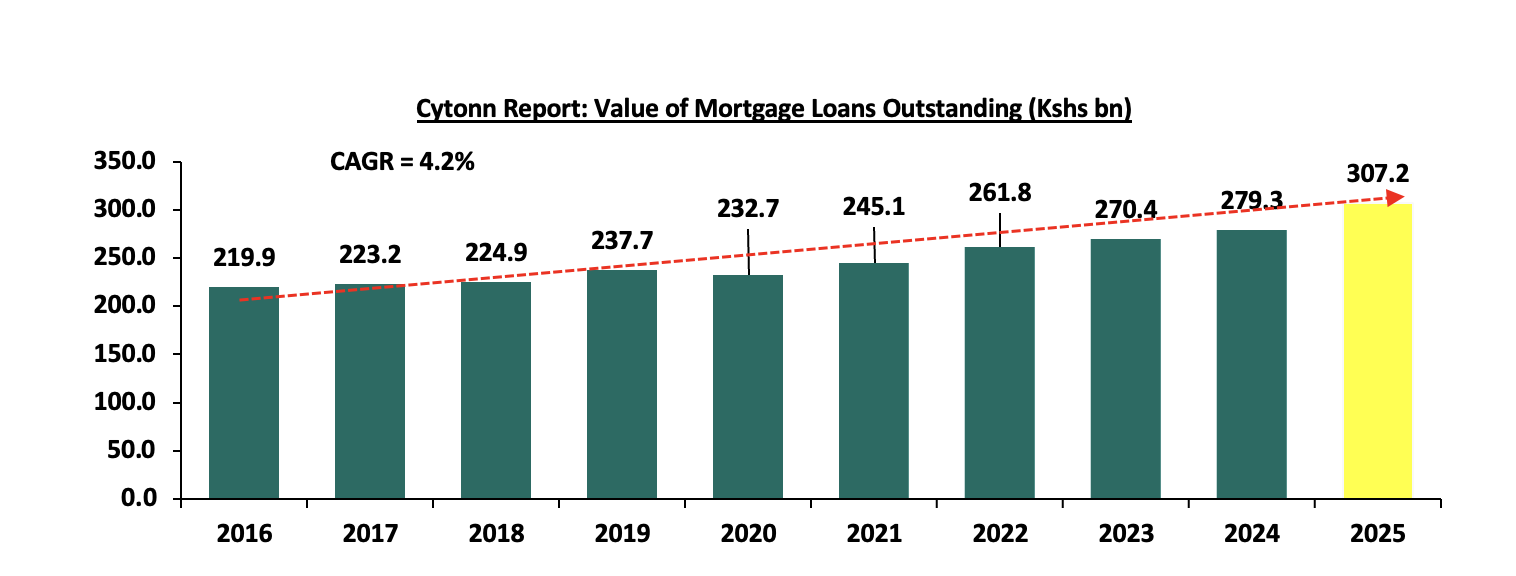
According to the CBK Bank Supervision Annual Report 2025, the value of mortgage loans outstanding increased by 10.0% to Kshs 307.2 bn in December 2025, from Kshs 279.3 bn in December 2024, attributable to new mortgage loans granted during the year. The chart below shows the value of mortgage loans outstanding over the past decade:
Source: Central Bank of Kenya (CBK), Cytonn Research.
The chart highlights three distinct phases. Between 2015 and 2019, the market stagnated, with the value of mortgages increasing by only 16.9% to Kshs 237.7 bn in 2019, from Kshs 203.3 bn in 2015, as the interest rate cap introduced in 2016 made long-term, risk-priced lending unattractive to banks. Between 2019 and 2023, growth resumed but remained modest, with the value of mortgages increasing by 13.8% to Kshs 270.4 bn in 2023, from Kshs 237.7 bn in 2019. In 2024, the value of mortgages increased by 3.3% to Kshs 279.3 bn, from Kshs 270.4 bn in 2023, as the CBR peaked at 13.0% and the average mortgage rate rose to 15.2%, as per the CBK Bank Supervision Annual Report 2024. Consequently, the 10.0% growth to Kshs 307.2 bn in 2025, from Kshs 279.3 bn in 2024, was the highest annual growth in a decade. However, over the full decade, the value of mortgages has recorded a CAGR of only 4.2%, below the growth in nominal GDP, indicating that the market has not deepened relative to the economy over the period.
The growth in the number of mortgage accounts, on the other hand, has been significantly weaker, as shown below: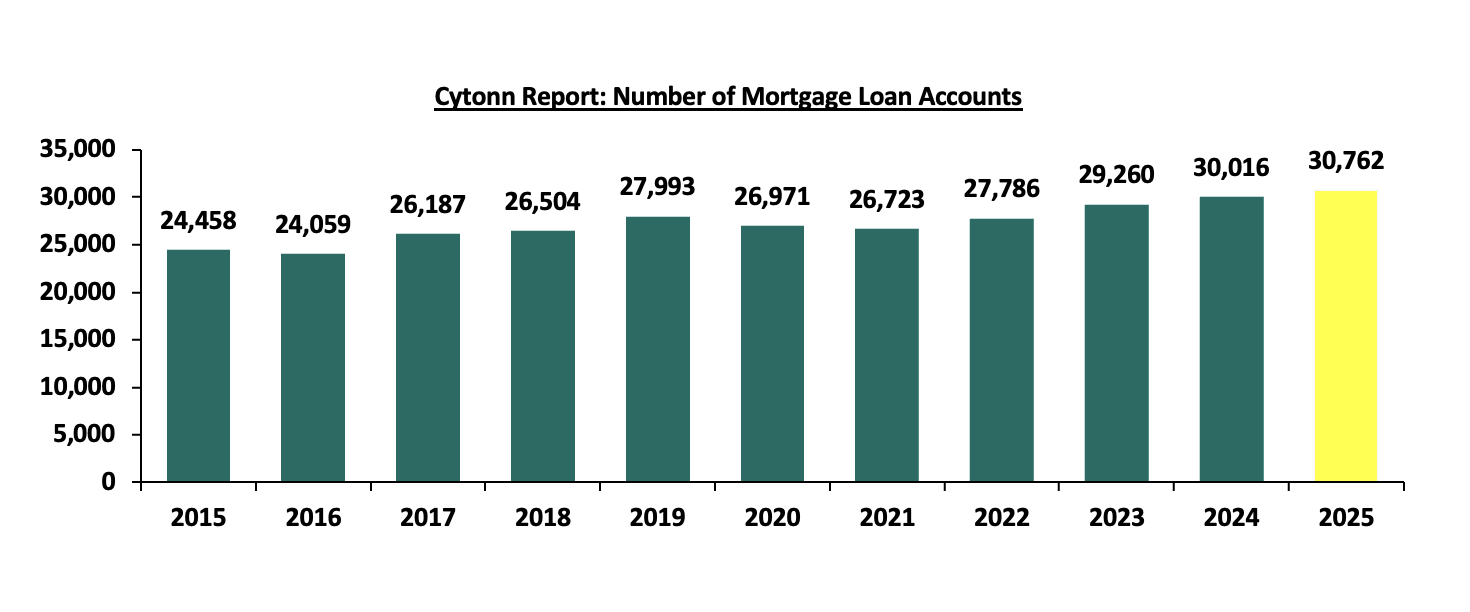
Source: Central Bank of Kenya (CBK), Cytonn Research
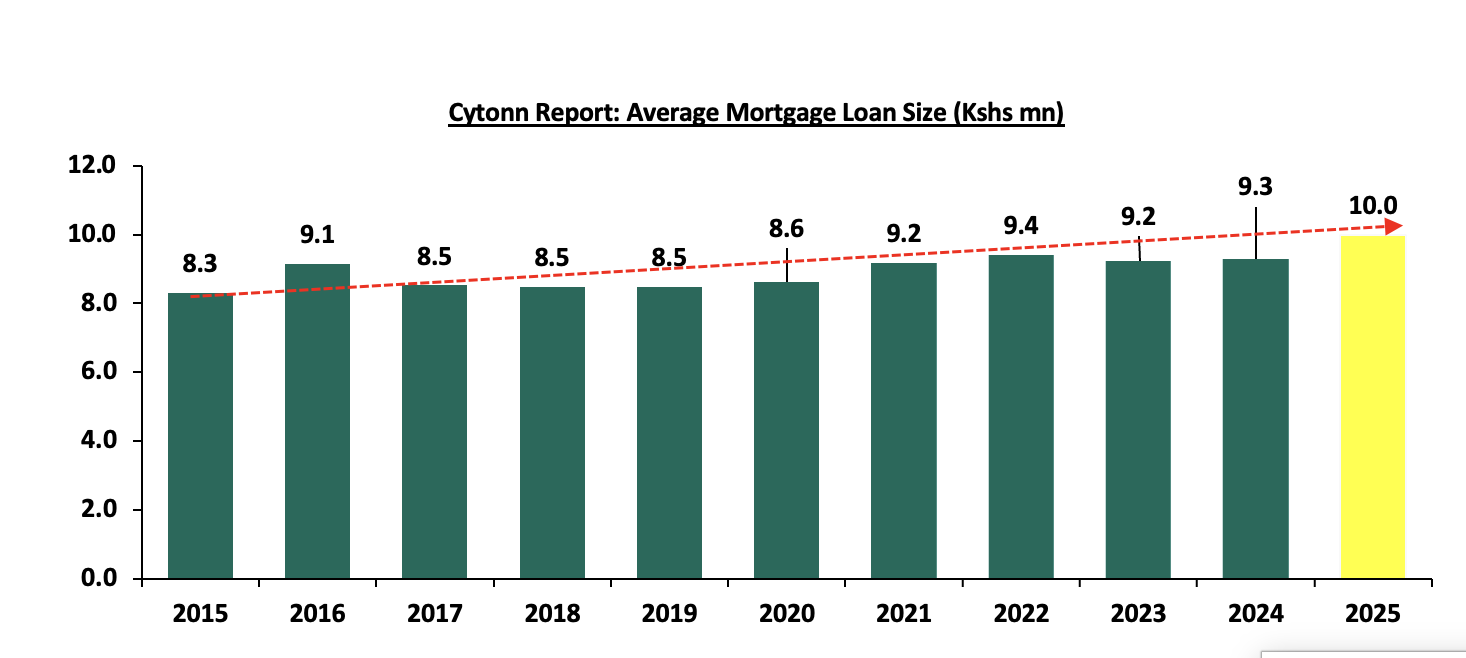
The number of accounts increased by only 2.5% to 30,762 in 2025 from 30,016, an addition of 746 accounts. Notably, the number of accounts in 2025 was only 9.9% higher than the 27,993 recorded in 2019, meaning that the market has spent six years recovering the borrowers it lost during the rate cap period and the pandemic. The divergence between value and volume is explained by loan size, with the average mortgage increasing by 11.1% to Kshs 10.0 mn in 2025, from Kshs 9.0 mn in 2024. In our view, this confirms that the 2025 recovery was driven by existing borrowers taking larger loans on the back of lower rates, rather than by new borrowers entering the market.
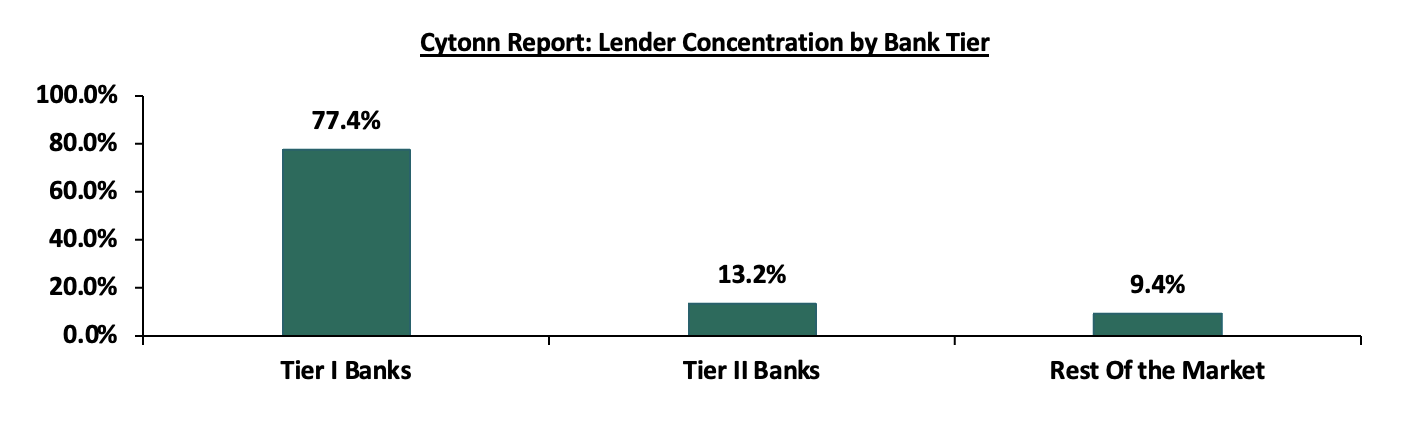
Mortgage lending also remains highly concentrated. Nine lenders accounted for 90.6% of the market in 2025, comprising seven large banks, namely KCB, Absa, Stanbic, NCBA, Co-operative Bank, Standard Chartered and Equity, with 77.4%, and two medium-sized lenders, HFC and Family Bank, with 13.2%. In addition to direct bank lending, the Kenya Mortgage Refinance Company (KMRC) has become an increasingly important contributor to the overall mortgage market. As per the CBK, 10 lenders had outstanding KMRC refinancing facilities amounting to Kshs 19.6 bn as at December 2025, a 64.7% increase from Kshs 11.9 bn across 7 lenders in December 2024, equivalent to 6.4% of the value of mortgages outstanding. Additionally, KMRC had cumulatively refinanced 5,148 mortgages by the end of 2025, equivalent to 16.7% of the mortgage accounts in the market, as highlighted in our KMRC Review 2026. The higher share by number than by value indicates that KMRC-backed mortgages are smaller than the market average, meaning that KMRC is reaching lower-income borrowers than the rest of the market. The chart below shows the value of mortgages outstanding by bank tier:
Source: Central Bank of Kenya (CBK),
KCB Group was the largest contributor to the mortgage market among the lenders, with mortgages of Kshs 126.8 bn in 2025, equivalent to 41.3% of the Kshs 307.2 bn market. Among medium-sized banks, HFCB Group, historically Kenya's dedicated mortgage lender, grew its mortgage book by 4.3% to Kshs 26.5 bn in 2025, from Kshs 25.4 bn in 2024, even as the group continues to diversify away from mortgage lending.
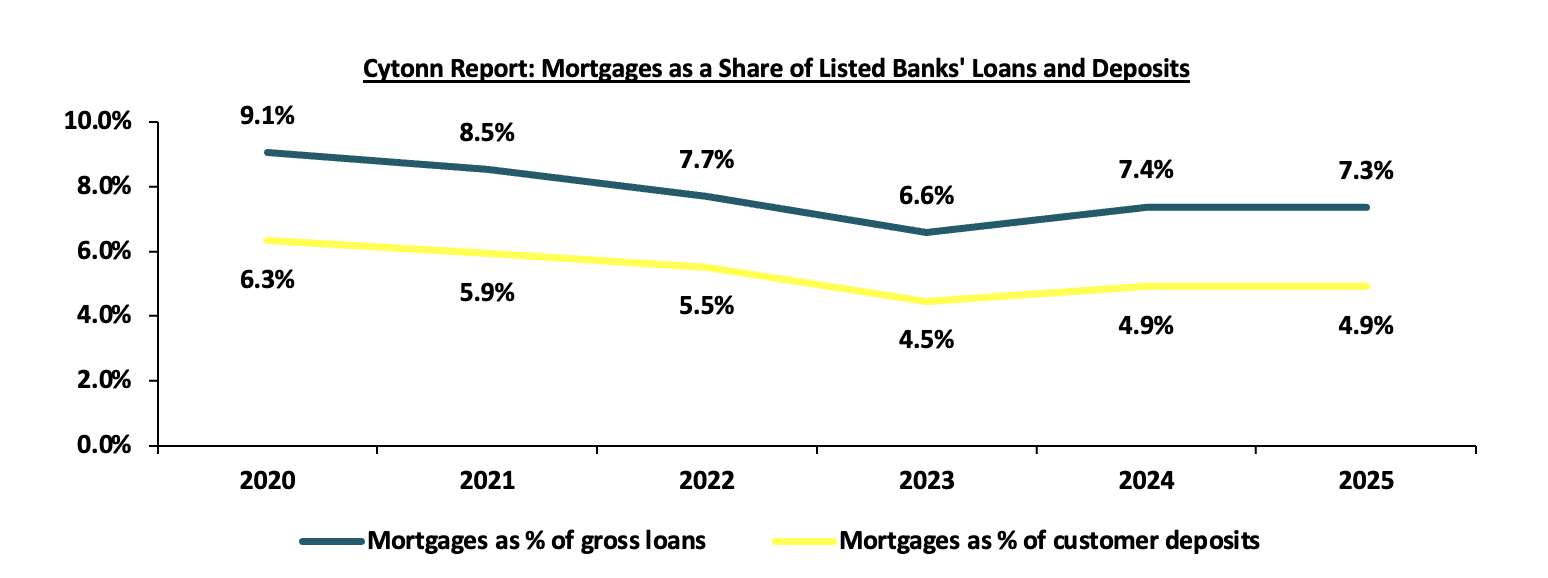
To assess the importance of mortgages to the banking sector, we compare the mortgage book with the sector's gross loans and customer deposits, as summarized below:
|
Cytonn Report: Mortgages as a Share of Listed Banks' Loans and Deposits |
||||||
|
Item (Amounts in bn Kshs) |
2020 |
2021 |
2022 |
2023 |
2024 |
2025 |
|
Mortgages outstanding |
232.7 |
245.1 |
261.8 |
270.4 |
279.3 |
307.2 |
|
Gross loans |
2,567.9 |
2,872.8 |
3,406.6 |
4,112.5 |
3,787.8 |
4,180.2 |
|
Customer deposits |
3,679.1 |
4,128.4 |
4,740.7 |
6,063.2 |
5,681.0 |
6,242.8 |
|
Mortgages as % of gross loans |
9.1% |
8.5% |
7.7% |
6.6% |
7.4% |
7.3% |
|
Mortgages as % of customer deposits |
6.3% |
5.9% |
5.5% |
4.5% |
4.9% |
4.9% |
Source: CBK Bank Supervision Annual Reports, Cytonn Research
In 2025, listed banks held gross loans of Kshs 4,180.2 bn and customer deposits of Kshs 6,242.8 bn, against mortgages outstanding of Kshs 307.2 bn in the market. Notably, the Kshs 27.9 bn increase in the value of mortgages during the year was equivalent to only 7.1% of the Kshs 392.4 bn increase in listed banks' gross loans, with mortgages accounting for 7.3% of listed banks' gross loans and 4.9% of their deposits in 2025, down from 9.1% and 6.3%, respectively, in 2020. Over the same period, listed banks recorded a weighted average growth of 18.9% in their investments in government securities, more than twice the 8.9% weighted average growth in loans and advances, as banks continued to favour government securities, which offer yields of between 8.8% and 13.6% with no credit risk, title complications or foreclosure costs, compared to an average mortgage rate of 13.5% and a mortgage non-performing loan ratio of 16.3%.
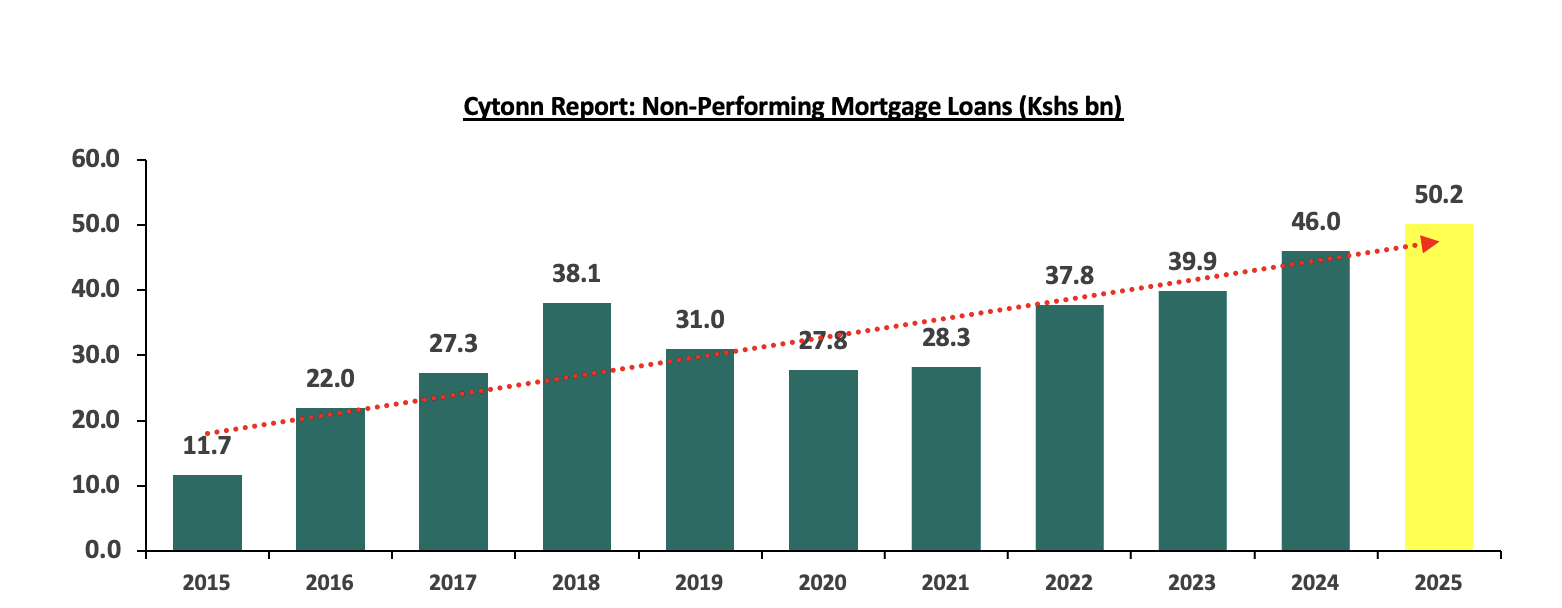
Asset quality, in turn, has deteriorated steadily, as shown in the chart below:
Source: Central Bank of Kenya (CBK)
Non-performing mortgages increased by 9.1% to Kshs 50.2 bn in 2025, from Kshs 46.0 bn in 2024, mainly attributable to the reduced debt servicing capacity of borrowers, as lending rates remained elevated for most of the year despite the easing of monetary policy, with the average commercial bank lending rate at 16.6% in January 2025 and 14.8% in December 2025. However, as the value of mortgages grew faster, by 10.0%, the mortgage NPL ratio declined marginally by 0.2% points to 16.3% in 2025, from 16.5% in 2024. Despite this, the ratio remained above the banking industry's gross NPL ratio of 16.0%, having been below the industry ratio of 17.1% in 2024, indicating that asset quality in mortgages has not improved in line with the broader banking sector.
Section III: Regional Comparison
Kenya's mortgage market is larger than those of Uganda, Nigeria and Egypt relative to their economies, but a fraction of the size of the markets in South Africa and Morocco, as shown below: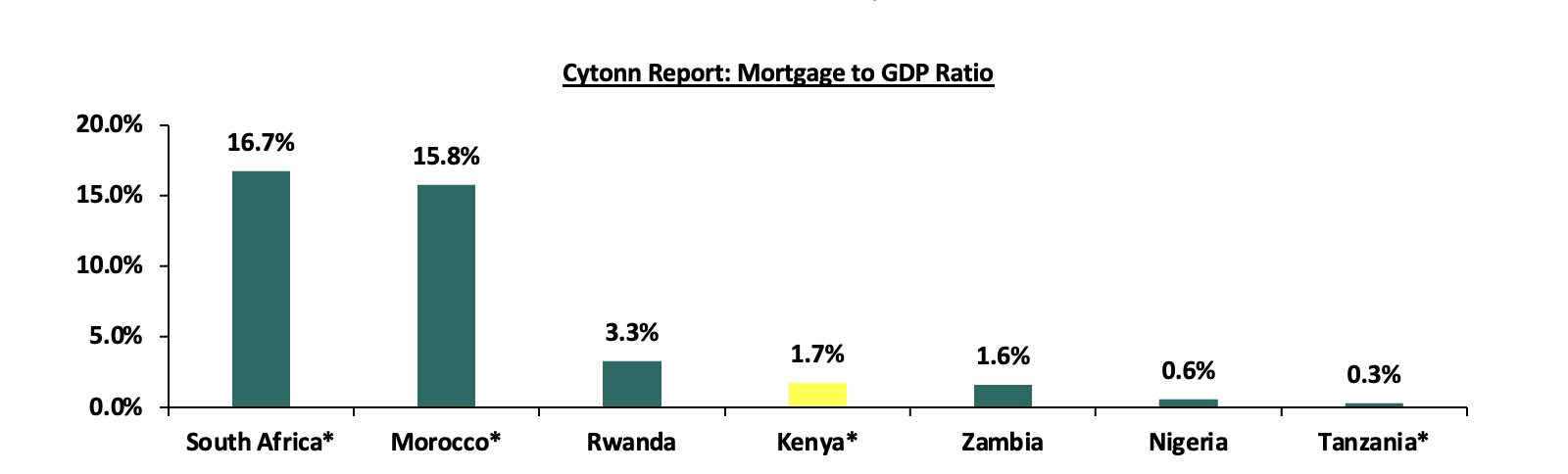
Source Cytonn Research, *Figures as of FY’2025,
The comparison across the countries highlights the following on penetration, rates and institutions:
- South Africa: Rates linked to the policy rate and long tenors: With mortgages at 17.6% of GDP, South Africa's market is built on 20 to 30-year tenors and mortgage pricing referenced to a prime rate set at a fixed 350 bps above the repo rate. Following the September 2026 hike in the repo rate to 7.25%, the prime rate stands at 10.75%, with mortgage rates 3.5% points above the policy rate, compared to 4.75% points in Kenya. Notably, the South African Reserve Bank published a consultation paper in February 2026 proposing to replace the prime rate with the policy rate as the reference rate for lending, mirroring Kenya's shift to KESONIA,
- Morocco: Low rates, guarantees and direct buyer support: Housing loans in Morocco stood at MAD 273.0 bn in 2025, equivalent to 15.8% of GDP based on Bank Al-Maghrib data, at an average rate of 4.64% in Q3'2025. The market is supported by the FOGARIM state guarantee fund, which enables lending to low-income and informal earners, and the Daam Sakane programme, which had disbursed MAD 5.4 bn in direct housing aid to 66,305 buyers by September 2025, 24.0% of whom were Moroccans living abroad,
- Rwanda: Land administration as an enabler: At 3.3% of GDP, Rwanda's mortgage market is almost twice Kenya's relative to GDP, supported by a fully registered and digitized land system, which reduces the time and cost of registering titles and charges,
- Zambia: High borrowing costs constraining mortgage uptake: Zambia’s mortgage market, at 1.6% of GDP, is broadly comparable in size to Kenya’s relative to the economy, with the Bank of Zambia reporting 7,400 outstanding mortgages valued at ZMW 10.0 bn, as per the Centre for Affordable Housing Finance in Africa (CAHF). The limited uptake is mainly attributable to high borrowing costs, with the average commercial bank lending rate at 28.0% in April 2026, 14.8% points above the policy rate of 13.25%, almost double Kenya’s average lending rate of 14.4%, and mortgage rates ranging from 16.0% to as high as 34.5%.
For Kenya to match South Africa’s 16.7% ratio, the mortgage book would need to grow by Kshs 2.6 tn, equivalent to 262,826 additional mortgages at the current average mortgage size of Kshs 10.0 mn, 8.5x the current number of mortgage accounts. Similarly, matching Morocco’s 15.8% would require the book to grow by Kshs 2.5 tn, equivalent to 247,010 additional mortgages. The regional evidence suggests that the levers with the largest impact are the spread of mortgage rates over the policy rate, as evidenced by Zambia’s high borrowing costs, and the availability of state-backed mortgage guarantees, as demonstrated by Morocco, both of which are within the control of domestic policy.
Section IV: Cost of Borrowing and Affordability
a) The CBR path and the transmission to lending rates
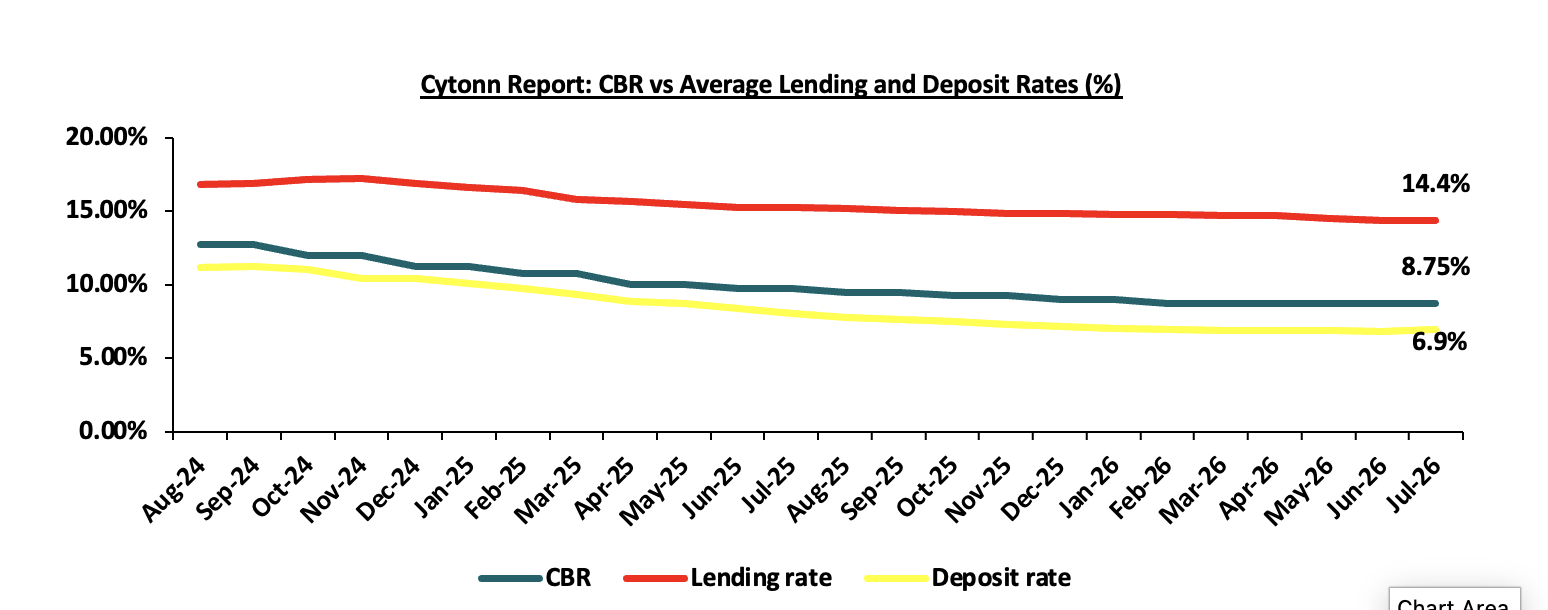
The cost of mortgage finance in Kenya is closely tied to the monetary policy stance. Following the tightening cycle of 2023 and 2024, during which the CBR peaked at 13.0%, the Monetary Policy Committee (MPC) commenced an easing cycle in August 2024, cutting the CBR by a cumulative 425 bps to 8.75% by February 2026. The MPC has since maintained the CBR at 8.75% at its April, June, August and October 2026 meetings, amid rising inflationary pressures from elevated global oil prices linked to the conflict in the Middle East, with inflation rising to 6.8% in September 2026. The chart below compares the CBR with the average lending and deposit rates of commercial banks, as per the KNBS Leading Economic Indicators July 2026:
Source: KNBS Leading Economic Indicators July 2026, Central Bank of Kenya (CBK)
The rate cuts have gradually transmitted to lending rates, with the average commercial bank lending rate declining to 14.3% in July 2026, from 17.2% in November 2024. Similarly, the average interest rate on mortgages declined to 13.5% in 2025 from 15.2% in 2024, while the range of mortgage rates narrowed to between 7.5% and 19.6%, from between 8.2% and 20.4% in 2024. However, at 13.5%, the average mortgage rate remains 4.75% points above the CBR, and well above the 11.3% average recorded in 2021, before the tightening cycle. With the MPC deciding to maintain the CBR at 8.75%, in line with expectation as highlighted in our Cytonn Q3'2026 Markets Review, which means that the scope for further declines in mortgage rates in the near term will depend mainly on the competitive pricing of the premium (K) charged by banks rather than on further policy rate cuts
b The New Risk-Based Credit Pricing Model
In August 2025, the CBK issued a revised Risk-Based Credit Pricing Model (RBCPM), under which the lending rate for variable rate loans is determined as KESONIA plus a premium (K) plus fees and charges. The premium covers the bank's lending-related operating costs, the return to shareholders and the borrower-specific risk premium, while fees and charges include origination, arrangement and commitment fees. Where the use of KESONIA is not practical, banks may use the CBR as the alternative reference rate. The model took effect for all new variable-rate loans from 1st September 2025 and for existing variable-rate loans from 28th February 2026, following a six-month transition period, and by December 2025, all banks had obtained Board approval for their pricing models. In addition, banks are now required to publish their weighted average lending rates, average premiums and fees for each lending product on their websites and on the Total Cost of Credit (TCC) website.
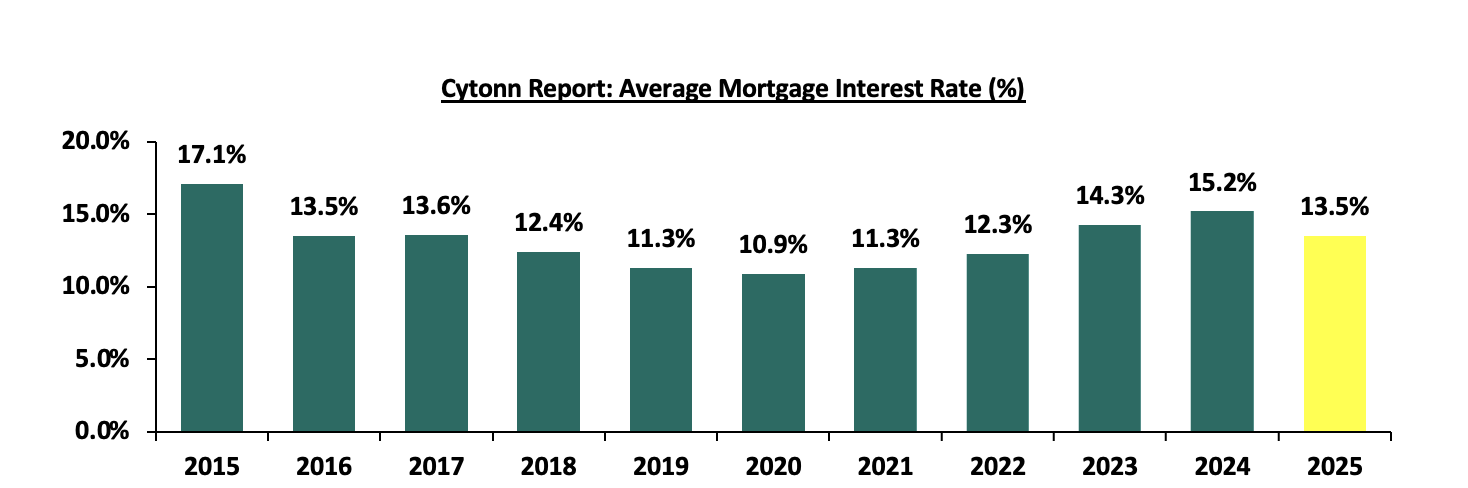
The trend in the average mortgage rate shows how much the cost of mortgages has depended on the policy cycle:
Source: Central Bank of Kenya (CBK).
The average mortgage interest rate declined by 3.6% points to 13.5% in 2016, from 17.1% in 2015, following the introduction of the interest rate cap in September 2016, and continued to ease, declining by a further 2.6% points to a low of 10.9% in 2020, supported by the rate cap regime and the accommodative monetary policy stance during the COVID-19 pandemic. However, the trend reversed from 2021, with the average mortgage rate increasing by 4.3% points to 15.2% in 2024, from 10.9% in 2020, as the CBK tightened monetary policy to contain inflation and exchange rate pressures, with the CBR peaking at 13.0% in 2024. In 2025, the average mortgage rate declined by 1.7% points to 13.5%, from 15.2% in 2024, on the back of the easing cycle, with the range of mortgage rates narrowing to between 7.5% and 19.6%, from between 8.2% and 20.4% in 2024, as per the CBK.
c) House Price Trends
House prices have continued to rise, but performance is diverging sharply between houses and apartments. The overall index rose by 4.8% to 118.4 in Q1'2026, from 113.0 in Q1'2025, driven by an 8.5% increase in standalone house prices to 133.6, while apartment prices declined by 3.0% to 88.7, their fourth consecutive quarterly decline. The decline in apartment prices reflects a supply build-up in the upper and middle-income segments in Nairobi, and is a positive development for first-time buyers, who are more likely to purchase apartments. The chart below shows the performance of the According to the Kenya National Bureau of Statistics (KNBS) Residential Property Price Index (RPPI) by segment: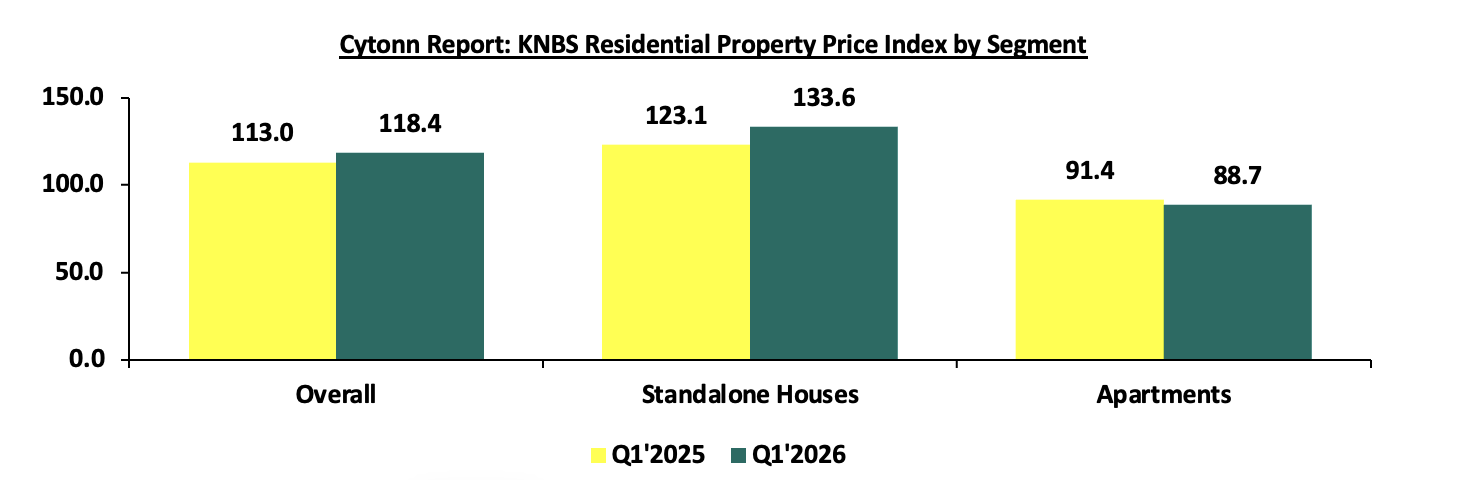
Source: Kenya National Bureau of Statistics (KNBS) Residential Property Price Index;
Our own data on the Nairobi Metropolitan Area (NMA) points to a similar trend, as shown in the chart below:
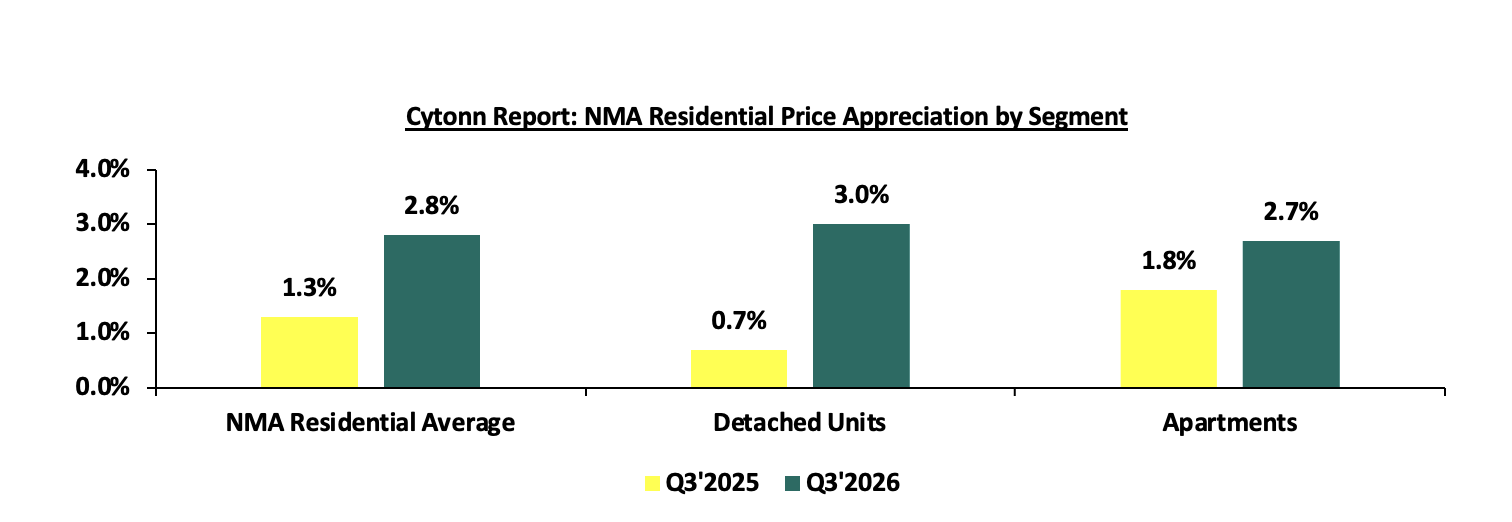
The average y/y price appreciation in the NMA residential market increased by 1.5% points to 2.8% in Q3'2026, from 1.3% in Q3'2025, as per our Cytonn Q3'2026 Markets Review, driven by a 2.3% points increase in detached unit price appreciation to 3.0%, from 0.7%, while apartment price appreciation rose more moderately to 2.7%, from 1.8%. The stronger performance of detached units reflects a continued shortage of quality standalone housing stock, such as bungalows, townhouses and maisonettes, amid sustained demand from owner-occupiers, while apartment prices have been weighed down by a build-up of supply, with select nodes such as Kileleshwa and Ruaka recording price declines of 0.7% each. For first-time buyers, this divergence is a positive development, with apartments in the lower mid-end satellite towns offering the most accessible entry point at an average of Kshs 82,977 per SQM, 44.1% lower than the average detached unit price of Kshs 148,340 per SQM, and recording the slowest appreciation of 2.5%. Similarly, the HassConsult Q2'2026 Property Index, as highlighted in our Q3 review, shows that satellite town property prices declined by 0.6% q/q to Kshs 14.5 mn, with six of the nine satellite apartment markets surveyed recording price declines.
d) Affordability
Mortgage affordability in Kenya remains constrained by income levels, even within the formal sector. According to the Economic Survey 2026, average annual earnings per employee in the modern sector increased by 5.9% to Kshs 988.2 thousand in 2025, from Kshs 933.1 thousand in 2024, equivalent to a monthly salary of Kshs 82,348, with private sector earnings averaging Kshs 1.0 mn and public sector earnings averaging Kshs 874.3 thousand. However, after adjusting for inflation, real average earnings increased by only 2.0% to Kshs 678.8 thousand, from Kshs 665.4 thousand in 2024. Against these income levels, the average mortgage of Kshs 10.0 mn in 2025, as per the CBK, was equivalent to 10.1x the average annual earnings of a formal sector employee. Assuming the average mortgage rate of 13.5% over a 20-year tenor, the monthly repayment on the average mortgage would amount to Kshs 120,737.0, equivalent to 1.8x the average monthly salary, meaning that the average mortgage exceeds the entire monthly income of the average formal sector worker.
Section V: Lenders, Products and the Supply Side
a) Bank Mortgage Books and New Products
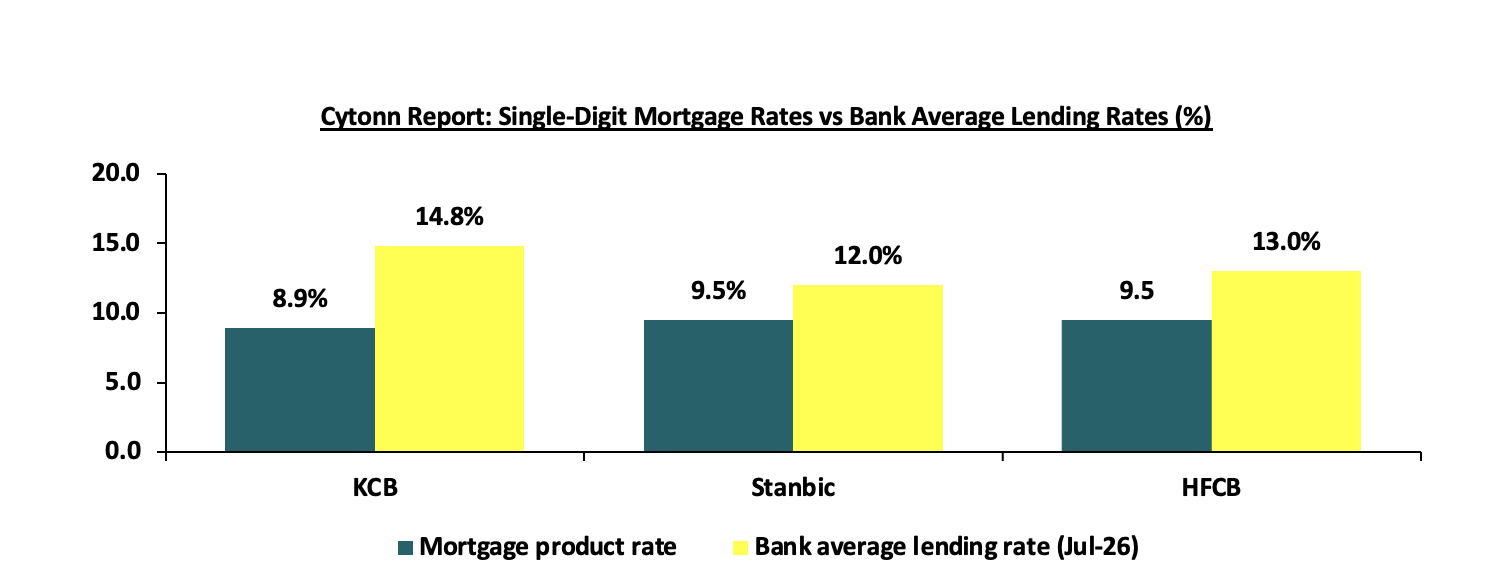
The large banks have responded to the easing cycle and KMRC's funding with single-digit fixed-rate products. KCB is running a home loan campaign until 31st December 2026 at a fixed rate from 8.9% for the full tenor, with financing of up to 105.0% and loans of up to Kshs 10.5 mn over 25 years. Stanbic offers a KMRC-backed affordable housing mortgage at 9.5% fixed over 25 years, while HFC offers 9.5% fixed mortgages over 20 years through its partnership with Superior Homes. The chart below compares the rates on these products with each bank's overall average lending rate:
Source: KCB, Stanbic, HF Group, CBK Total Cost of Credit (July 2026)
The single-digit products are priced between 2.5% and 5.9% points below the respective bank's average lending rate, which is only possible because they are funded by KMRC at 5.0% rather than by deposits. This illustrates that the binding constraint on mortgage pricing in Kenya is the cost and tenor of funding, not lenders' willingness to lend. However, the products are capped at Kshs 10.5 mn, require verifiable income, and in KCB's case are time-bound and limited to properties valued at not more than Kshs 15.0 mn, meaning that their reach is limited to salaried buyers of lower-priced units.
Diaspora borrowers present a significant opportunity for these products. Diaspora remittances stood at USD 5,012.7 mn in the twelve months to August 2026, with North America accounting for 50.3% of the inflows, and a significant share is directed towards property. Diaspora borrowers have verifiable, largely hard-currency incomes, making them easier to underwrite than most local informal earners. KCB accepts foreign income under its home loan campaign, Stanbic's affordable housing mortgage is available to Kenyans abroad provided the loan is denominated in Kenya Shillings, and the Boma Yangu platform has a dedicated diaspora applicant channel. In Morocco, Moroccans living abroad accounted for 24.0% of the beneficiaries of the Daam Sakane housing programme, an indication of the scale of demand that a well-targeted diaspora product can unlock. The main barriers in Kenya remain the difficulty of conducting property due diligence from abroad and the risk of fraud in land transactions, both of which point back to land administration.
b) Case Study: HF Group and Mortgage Lending
HF Group, Kenya's only historically dedicated mortgage lender, provides the clearest illustration of the economics of mortgage lending in Kenya. In December 2019, HFC was the second-largest mortgage lender in the country with Kshs 33.7 bn in mortgage loans. After years of losses driven by the interest rate cap and deteriorating mortgage asset quality, the group raised Kshs 6.0 bn through a rights issue in 2024 and embarked on a diversification strategy, with non-mortgage loans rising to 31.2% of its loan book by Q3'2025. In May 2026, the group adopted the HFCB Group name, formalizing its transition from a mortgage-focused lender into a broader financial services group.
In FY’2025, HFCB Group’s profit after tax increased by 171.1% to Kshs 1.4 bn, from Kshs 524.7 mn in FY’2024, as per its FY’2025 audited financial statements. Customer deposits increased by 17.7% to Kshs 55.9 bn, from Kshs 47.5 bn, while net loans and advances increased by only 5.8% to Kshs 41.1 bn, from Kshs 38.9 bn. In contrast, investment in government securities increased by 66.6% to Kshs 28.3 bn, from Kshs 17.0 bn, with the government securities to deposit ratio increasing by 14.8% points to 50.6%, from 35.7%, and interest income from government securities and other financial assets increasing by 78.6% to Kshs 2.8 bn, from Kshs 1.6 bn. This indicates that the group’s return to profitability was driven primarily by investment in government securities rather than by mortgage lending. In H1'2026, profit after tax increased by 59.9% to Kshs 1.0 bn, from Kshs 0.6 bn in H1'2025, while net loans and advances increased by 11.5% to Kshs 43.4 bn, from Kshs 38.9 bn, indicating a pick-up in lending. However, investment in government securities increased at a faster rate of 41.0% to Kshs 33.7 bn, from Kshs 23.9 bn, highlighting that the risk-return profile of government securities continues to be more attractive to lenders than that of mortgage lending.
c) Developers, construction activity and construction costs
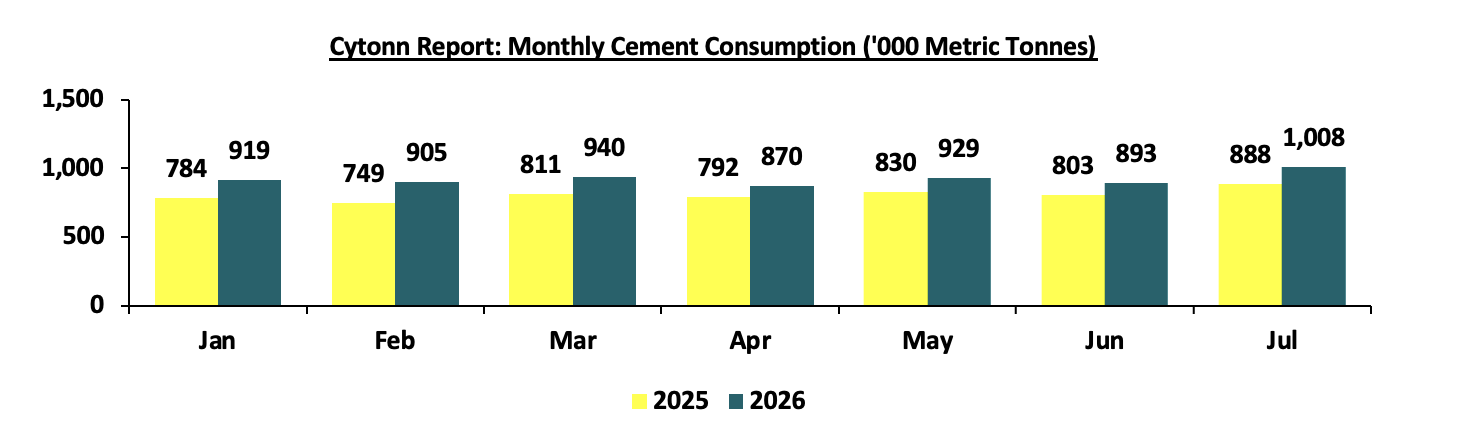
On the supply side, high frequency indicators point to a recovery in construction activity in 2026. As per the KNBS Leading Economic Indicators, cement consumption increased by 14.3% to 6.5 mn metric tonnes in the first seven months of 2026, following a 20.3% increase to 10.3 mn metric tonnes in 2025, as shown below:
Source: KNBS Leading Economic Indicators July 2026
Consumption in every month of 2026 exceeded the corresponding month of 2025, with July 2026 recording 1.0 mn metric tonnes, a 13.5% y/y increase. Additionally, residential building plans approved in Nairobi increased by 20.2% to Kshs 73.2 bn in the first five months of 2026, reversing a decline in 2025, when approvals in the first eight months fell to Kshs 114.3 bn from Kshs 148.5 bn. Together, these indicators point to a growing
After a period of stability between 2024 and mid-2025, during which annual construction cost inflation slowed to 0.5% in 2025, the Construction Input Price Index rose by 5.7% to 126.4 in Q2'2026, from 119.5 in Q1'2026, driven by fuel, transport, cement and concrete prices following the spike in global oil prices. The Architectural Association of Kenya reported that the cost of constructing a standard bungalow increased by 12.3% to Kshs 54,730 per square metre in 2025. Rising construction costs are a direct threat to the affordability arithmetic in Section IV, since every increase in unit costs pushes AHP units further from the income levels they are designed for.
d) REIT Performance
REITs, which could channel institutional capital into rental and for-sale housing, remain small. As at 25th September 2026, Acorn D-REIT and I-REIT, which are focused on student accommodation, traded at Kshs 29.7 and Kshs 24.4 per unit on the Unquoted Securities Platform, 48.5% and 22.0% above their Kshs 20.0 inception price, while ILAM Fahari I-REIT traded at Kshs 13.8, 31.0% below its inception price. Acorn's performance shows that well-structured residential REITs can attract investors, but there is still no REIT dedicated to affordable housing. With average apartment rental yields of 6.1% in the Nairobi Metropolitan Area in H1'2026, against an average mortgage rate of 13.5%, a mortgage-financed rental investment carries a negative spread of 7.4% points, which explains the absence of buy-to-let investors, a key source of mortgage demand in developed markets.
Section VI: Funding the Market: KMRC and Long-Term Capital
- KMRC's Refinancing Record
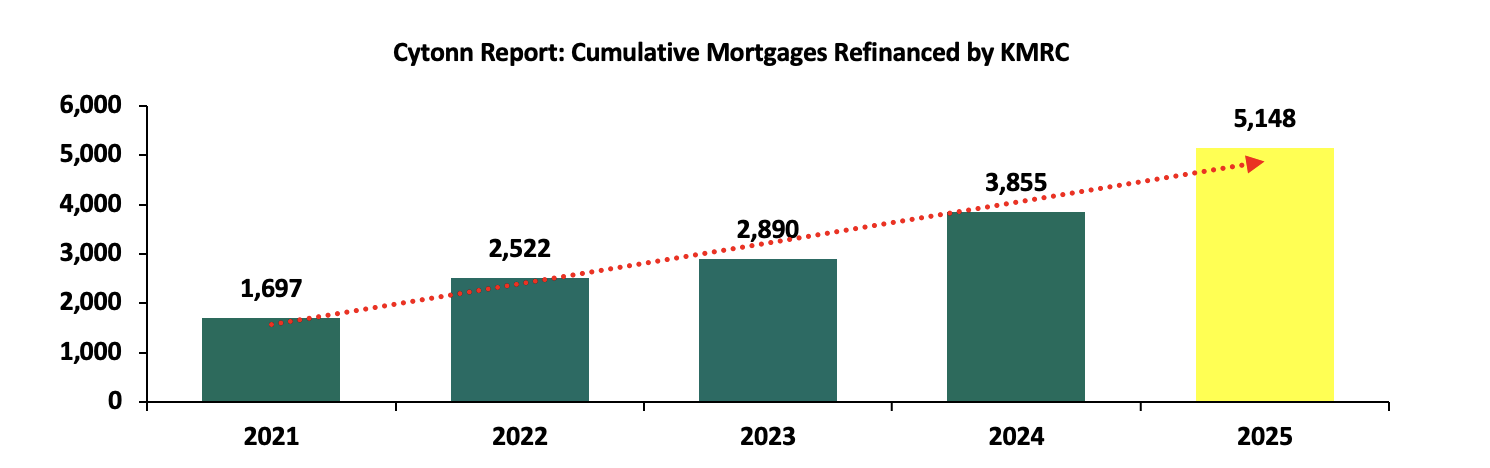
KMRC has steadily expanded its footprint since it commenced lending, as shown below:
Source: Kenya Mortgage Refinance Company (KMRC)
KMRC had refinanced 5,148 mortgages cumulatively by the end of 2025, a 33.5% increase from 3,855 in 2024, with cumulative disbursements to PMLs of Kshs 25.4 bn, as per its 2025 Annual Report. Ten lenders had outstanding KMRC facilities of Kshs 19.6 bn in December 2025, up from seven lenders with Kshs 11.9 bn in 2024. Two features of this footprint stand out. First, KMRC-refinanced mortgages account for 16.7% of mortgage accounts but only 6.4% of the value of the mortgage book, with its affordable home loans averaging Kshs 4.7 mn, less than half the market average, meaning that KMRC is reaching a lower-income borrower than the rest of the market.
KMRC currently has 18 PMLs, including commercial banks such as KCB, Co-operative Bank, Stanbic, NCBA, Absa, DTB, I&M, HFC, Credit Bank and Kingdom Bank, KWFT Microfinance Bank, and SACCOs such as Mwalimu, Harambee, Imarisha, Imarika, Bingwa, Qona and Kenya Police SACCO. KMRC's cumulative disbursements to PMLs have grown steadily since it commenced operations, as shown in the chart below: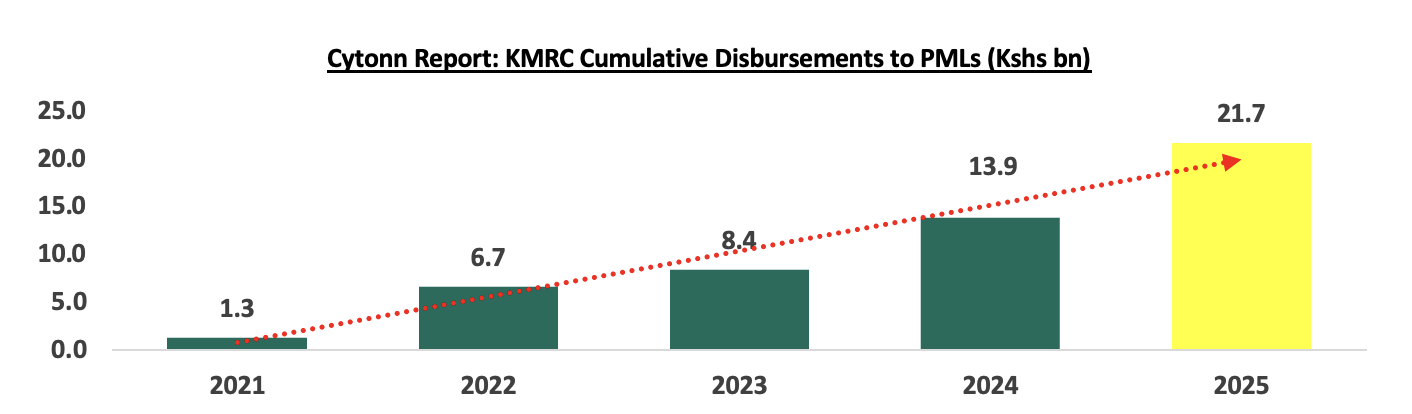
Source: KMRC, National Treasury, Cytonn Research
Cumulative disbursements by KMRC increased to Kshs 21.7 bn by 2025, from Kshs 13.9 bn in 2024 and Kshs 1.3 bn in 2021, with the company having refinanced over 4,500 affordable home loans across 39 counties by August 2025, as per the National Treasury. As per the CBK, 10 institutions had outstanding KMRC facilities amounting to Kshs 19.6 bn in December 2025, a 64.7% increase from Kshs 11.9 bn across 7 institutions in December 2024, equivalent to 6.4% of the total mortgage book. In addition, KMRC released its HY'2026 financial results, whose key highlights are summarized below:
|
Cytonn Report: KMRC Key Financial Highlights, HY'2025 - HY'2026 |
|||
|
Item (Kshs mn) |
HY'2025 |
HY'2026 |
y/y Change |
|
Interest income |
1,576.9 |
1,549.5 |
(1.7%) |
|
Interest expense |
(649.8) |
(877.9) |
35.1% |
|
Net interest income |
927.2 |
671.7 |
(27.6%) |
|
Total expenses |
(149.8) |
(170.7) |
14.0% |
|
Profit after tax |
544.2 |
350.7 |
(35.6%) |
|
Loans and advances |
18,776.6 |
24,269.4 |
29.3% |
|
Cash and cash equivalents |
16,154.7 |
16,031.1 |
(0.8%) |
|
Total assets |
40,952.6 |
46,444.0 |
13.4% |
|
Borrowings |
33,960.3 |
35,916.7 |
5.8% |
|
Debt securities in issue |
936.7 |
3,742.1 |
299.5% |
|
Total capital |
5,616.0 |
6,341.3 |
12.9% |
Source: KMRC HY'2026 Financial Statements
Key take-outs from KMRC's HY'2026 performance include:
- Strong growth in refinancing: Loans and advances to PMLs grew by 29.3% to Kshs 24.3 bn in HY'2026, from Kshs 18.8 bn in HY'2025, reflecting the continued uptake of KMRC funding by PMLs, supported by the single-digit mortgage campaigns by its partner banks,
KMRC has built a track record in the debt capital markets. In March 2022, it issued the first Kshs 1.4 bn tranche of its Kshs 10.5 bn Medium-Term Note programme at a coupon of 12.5%, which recorded a subscription rate of 478.6%. In May 2026, it issued a Kshs 3.0 bn, eight-year amortizing sustainability bond under the same programme, which received bids of Kshs 9.4 bn, a subscription rate of 312.8%, with proceeds earmarked for green and social home loans. Across the two issues, KMRC has raised Kshs 4.4 bn against bids of Kshs 16.1 bn, meaning that Kshs 11.7 bn of investor demand for housing-linked paper was left unmet. The sustainability of KMRC's model, however, depends on raising funds at a cost that allows it to continue lending at 5.0%, and its net interest income declined by 19.6% in FY'2025 and a further 27.6% in HY'2026, as higher-cost market funding replaced concessional funding from the World Bank and the African Development Bank.
For a detailed review of KMRC’s performance, including its refinancing activity, financial results and funding model, see our Kenya Mortgage Refinance Company (KMRC) Review 2026 and our Cytonn Weekly #34 Report.
- Pensions, SACCOs and REITs
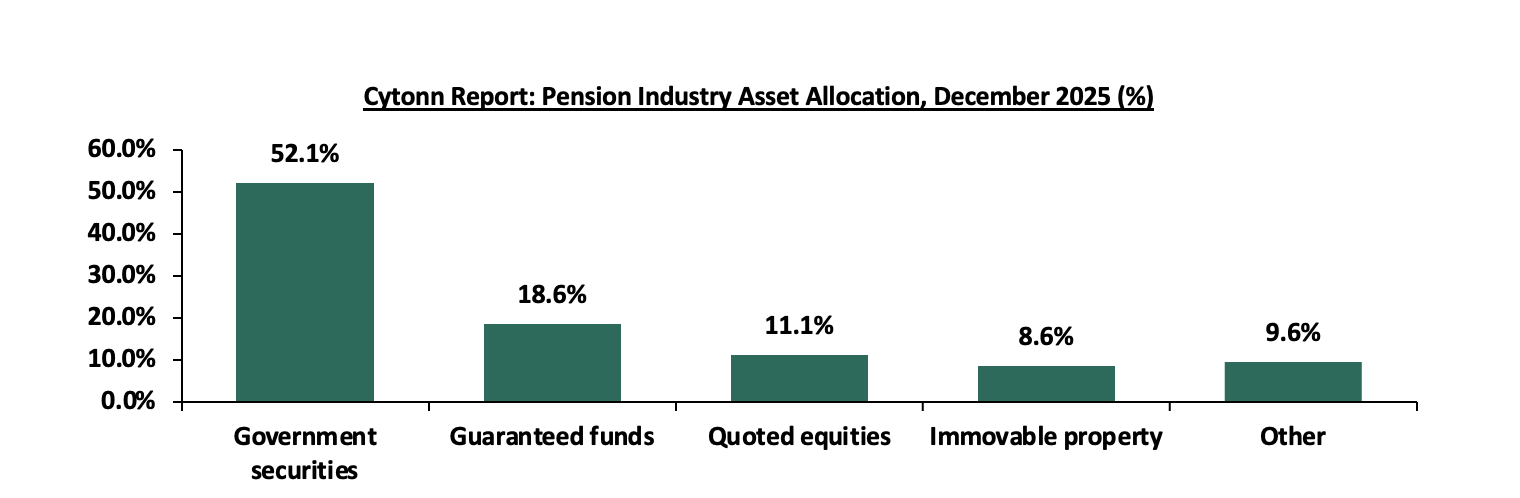
Pension funds are the largest untapped pool of long-term capital for housing. According to the Retirement Benefits Authority (RBA), pension assets grew by 24.6% to Kshs 2.8 tn in December 2025, allocated as shown below:
Source: Retirement Benefits Authority (RBA), Business Daily
Government securities accounted for 52.1% of pension assets, while immovable property accounted for only 8.6%, or Kshs 241.0 bn, against a regulatory limit of 30.0%, implying headroom of Kshs 602.0 bn, almost twice the size of the entire mortgage book. More significantly, the share of property in pension portfolios has been falling, from 14.5% in June 2023 to 8.57% in December 2025, as schemes have shifted towards government securities and, more recently, quoted equities. Pension funds have long-term liabilities that match the duration of mortgages, but Kenya does not offer them a liquid, standardized instrument through which to invest in mortgages, such as mortgage-backed securities. Similarly, SACCOs, with seven registered as KMRC lenders, serve exactly the middle and lower-income households the market struggles to reach, but their lending remains largely short to medium-term and unstandardized. REITs, have yet to emerge as a meaningful source of housing finance.
Section VII: Risks and Challenges
The mortgage market faces several risks and challenges on both the supply and demand sides, which include:
a) Risks and Challenges Facing Lenders and Developers
- Credit risk and slow foreclosure: The mortgage NPL ratio of 16.3% is above the industry average, and the time and cost of realizing security keep non-performing mortgages on balance sheets for extended periods,
- Competition from government securities: With a net domestic borrowing target of Kshs 1,030.1 bn in FY'2026/27, risk-free government securities will continue to compete with mortgages for bank balance sheets, as illustrated by the 13.8x gap between the increase in banks' holdings of government securities and the increase in mortgages in 2025,
- KMRC funding costs: The decline in KMRC's net interest income highlights the pressure on its ability to sustain refinancing at 5.0% as concessional funding is deployed,
- Rising construction costs: The 5.7% q/q increase in construction input costs in Q2'2026 threatens the delivery and pricing of affordable units, and,
- AHP funding gap: The Kshs 118.3 bn funding gap and 176 stalled projects could delay the delivery of units on which the affordable mortgage pipeline depends.
- b) Risks and Challenges Facing Borrowers
- Low and informal incomes: The average mortgage requires 1.47x average monthly earnings in repayments, while 83.8% of the workforce is in the informal sector and unable to meet lenders' income verification requirements,
- Interest rate risk: With 75.6% of mortgages on variable rates linked to KESONIA, borrowers are exposed to any tightening of monetary policy, with inflation at 6.8% in September 2026, approaching the upper bound of the 2.5% to 7.5% target range,
- Upfront costs: Deposits of 10.0% to 20.0% for standard mortgages, together with legal fees, valuation fees and stamp duty, significantly increase the upfront cost of a home,
- Title and transaction delays: Difficulties with property registration, the registration of charges and fraud in land transactions increase the time and cost of acquiring property, particularly for diaspora buyers, and,
- Limited awareness: Limited knowledge of KMRC-backed products and of the provision allowing the use of up to 40.0% of accrued pension benefits towards a home continues to limit uptake.
Section IX: Recommendations and Conclusion
Based on our analysis, the binding constraints on Kenya's mortgage market are the price of housing relative to incomes, the credit risk of lending to informal earners, and the efficiency of land administration, rather than the availability of long-term funding. Our recommendations are therefore focused on these constraints:
- Recapitalize the Kenya Mortgage Guarantee Trust (National Treasury and KMRC): The KMGT provides partial guarantees of up to 40.0% of the loan to borrowers earning below Kshs 200,000 per month, but its initial capitalization of Kshs 603.0 mn would fully back 251 loans of Kshs 6.0 mn before leverage. To guarantee 10,000 such loans, equivalent to 32.5% of the current number of mortgage accounts, the trust would require guarantee capacity of Kshs 24.0 bn, which at a leverage of 5x implies capital of Kshs 4.8 bn, equivalent to 6.1% of one year of levy collections. We recommend that a portion of the Affordable Housing Fund be allocated to the KMGT, given that a guarantee supports several times its value in bank and SACCO lending,
- Develop a Mortgage-Backed Securities Market (CMA, CBK and KMRC): The CMA should finalize a framework for residential mortgage-backed securities, building on KMRC's standardized mortgage documentation. This would give pension funds, with Kshs 602.0 bn of headroom in their property allocation, a liquid instrument through which to finance mortgages, and enable banks to recycle capital into new lending,
- Reform Land Titling and Foreclosure (Ministry of Lands and the Judiciary): The Ministry of Lands should complete the digitization of land registries, set statutory timelines for the registration of charges and sectional titles, and introduce a verified digital land search service to reduce fraud, which would also support diaspora demand. The legal framework for the realization of security should be streamlined to reduce the time and cost of foreclosure, lowering the credit risk premium on mortgages,
- Route AHP Sales Through Mortgages (State Department for Housing, Affordable Housing Board and KMRC): Completed AHP units should, where buyers qualify, be sold through KMRC-backed mortgages originated by banks and SACCOs rather than solely through tenant purchase. With KMRC holding Kshs 16.0 bn in undeployed cash, this would put idle funding to work and allow the Affordable Housing Fund to recycle capital into stalled projects,
- Tax-Exempt KMRC Bonds (National Treasury): Interest on KMRC bonds should be exempted from withholding tax, in line with infrastructure bonds. Given the Kshs 11.7 bn of unmet demand across KMRC's two bond issues, a tax exemption would allow KMRC to raise larger amounts at a lower cost and sustain single-digit mortgage rates as its concessional funding is deployed,
- Shift Bulk Infrastructure to the NIF (National Treasury): The financing of roads, water and sewerage for AHP sites should be moved to the National Infrastructure Fund, freeing levy resources for housing and lowering unit costs, and,
- Expand Diaspora and SACCO Mortgage Channels (Lenders, SASRA and KMRC): Lenders should develop dedicated diaspora mortgage products supported by digital land verification, while SASRA and KMRC should develop a standardized framework for SACCO mortgage lending, with alternative credit scoring based on mobile money and SACCO savings data to reach informal earners.
In conclusion, the 2025 recovery in Kenya's mortgage market was real, but it was cyclical rather than structural. Lower interest rates allowed existing borrowers to take larger loans, lifting the value of the book by 10.0%, but the number of borrowers grew by only 746, the average mortgage remains less affordable than in 2021, and banks continued to allocate 13.8x more new capital to government securities than to mortgages. The market's constraints have shifted from funding, where KMRC now holds surplus liquidity, to the price of housing, the credit risk of informal borrowers and land administration. The AHP, with 205,311 units under construction at an average cost that is affordable to the average formal worker on KMRC terms, represents the first real opportunity to connect affordable housing supply to mortgage finance at scale.
We expect the value of mortgages outstanding to grow at a high single-digit rate in 2026, supported by the stable interest rate environment following the MPC's decision to retain the CBR at 8.75%, the uptake of single-digit KMRC-backed products and the recovery in construction activity, as evidenced by the 14.3% increase in cement consumption in the first seven months of 2026. However, we expect growth in the number of mortgage accounts to remain in the low single digits, constrained by low and informal incomes, the 16.3% mortgage NPL ratio, rising construction costs and the risk of renewed monetary tightening as inflation approaches the upper bound of the target range. For the market to deepen structurally, we believe that the policy focus must shift from supplying funding to de-risking new borrowers through a recapitalized guarantee trust, connecting the AHP pipeline to mortgage finance, and reforming land administration.
Disclaimer: The views expressed in this publication are those of the writers where particulars are not warranted. This publication, which is in compliance with Section 2 of the Capital Markets Authority Act Cap 485A, is meant for general information only and is not a warranty, representation, advice, or solicitation of any nature. Readers are advised in all circumstances to seek the advice of a registered investment advisor.

- Talk to us
- Kenya
- P.O Box 20695 - 00200, Nairobi, Kenya
- Cell +254709101200
- Tel +254709101200
- WhatsApp +254741676635
- United States
- +254709101200
- DOWNLOAD OUR APP
-


- Kenya
- 8th Floor, Pinetree Plaza, Kaburu Drive, Ngong Road, Nairobi, Kenya
- USA
- Suite 1150, 1775 Eye Street NW, USA, Washington DC 20006, USA
- Investments
- High Yield
- Private Equity
- Real Estate
- Real Estate
- RiverRun Estates
- Cytonn Towers
- The Ridge
- Taraji Heights
- The Alma